Filter by

Economics for a sustainable world : an introduction to natural resource and e…
Written for undergraduate students with little or no exposure to economics, this introductory textbook offers a new perspective on environmental economics for the 21st century. It explains how economics for a sustainable world requires a new approach: accepting that the economy is intrinsically dependent on nature. Drawing on up-to-date case studies from around the globe, the book examines how …
- Edition
- -
- ISBN/ISSN
- 978-1-108-97269-7
- Collation
- xvi, 537 hlm. : ilus. ; 25 cm
- Series Title
- -
- Call Number
- 333.7 BAR E
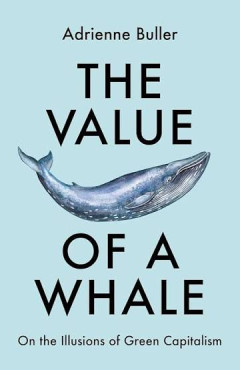
The value of a whale : on the illusions of green capitalism
Public understanding of, and outcry over, the dire state of the climate and environment is greater than ever before. Parties across the political spectrum claim to be climate leaders, and overt denial is on the way out. Yet when it comes to slowing the course of the climate and nature crises, despite a growing number of pledges, policies and summits, little ever seems to change. Nature is being…
- Edition
- -
- ISBN/ISSN
- 9781526162632
- Collation
- x1, 350 hlm. ; 20 cm
- Series Title
- -
- Call Number
- 333.72 BUL T

The price is wrong : why capitalism won't save the planet
Why the market will never solve the Climate Crisis RECENT TECHNICAL ADVANCES mean it is typically cheaper to produce electricity from renewable sources than from fossil fuels. Yet, around the world, the transition to green energy is happening too slowly if it is happening at all. As Brett Christophers argues, the problem is rooted in the absurdist nature of capitalist priorities: saving the …
- Edition
- -
- ISBN/ISSN
- 978-1-80429-231-1
- Collation
- xxxiii, 398 hlm. : ilus. ; 20 cm
- Series Title
- -
- Call Number
- 333.794 CHR P
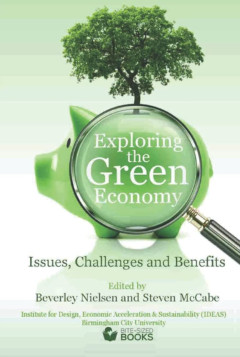
Exploring the green economy : issues, challenges and benefits
In considering how we can meet environmental targets, crucial to delivering Net Zero and fulfilling our commitments to the Paris Agreement, and in the context of the fact that we are holding the COP26 Climate Conference later this year, we must now focus on action and on increasing the pace of our response. Faced with impending catastrophe, action is urgently required. It is imperative that …
- Edition
- -
- ISBN/ISSN
- 9798532032347
- Collation
- 147 hlm. : ilus. ; 23 cm
- Series Title
- -
- Call Number
- 338.927 NIE E

Not the end of the world : how we can be the first generation to build a sust…
It’s become common to tell kids that they’re going to die from climate change. We are constantly bombarded by doomsday headlines that tell us the soil won’t be able to support crops, fish will vanish from our oceans, and that we should reconsider having children. But in this bold, radically hopeful book, data scientist Hannah Ritchie argues that if we zoom out, a very different picture…
- Edition
- -
- ISBN/ISSN
- 9780316536752
- Collation
- 341 hlm. : ilus. ; 25 cm
- Series Title
- -
- Call Number
- 338.927 RIT N
 Computer Science, Information & General Works
  Philosophy & Psychology
  Religion
  Social Sciences
  Language
  Pure Science
  Applied Sciences
  Art & Recreation
  Literature
  History & Geography